Understanding Your Home’s Energy Use
Our homes use electricity for so many things. Lights, appliances, gadgets, heating, cooling – it all adds up. Without a clear picture, it’s hard to make smart choices about saving energy.
You might be turning off lights, but is that the biggest drain? Maybe an old refrigerator is silently costing you a fortune. An energy monitor shows you exactly what’s pulling power.
It helps you spot these energy hogs. This knowledge empowers you. You can then make changes that actually make a difference.
Saving money and helping the planet become much easier.
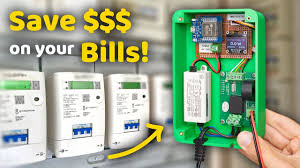
Your home’s energy consumption can be a hidden cost. A DIY smart home energy monitor offers a clear view into where your electricity is going. This allows for informed decisions to reduce waste, lower bills, and improve efficiency. It empowers you to take control of your home’s power usage.
What Is a Smart Home Energy Monitor?
A smart home energy monitor is a device. It tracks how much electricity your home uses. It usually connects to your main electrical panel.
Some clip onto the main wires. Others might plug into outlets. The monitor then sends this data to an app.
You can view this data on your phone or computer. You can see usage by appliance, by room, or even by the hour. This helps you understand your power habits.
It shows you where you can save money and energy.
Think of it like a fitness tracker for your house. A fitness tracker shows your steps, heart rate, and calories. An energy monitor shows your watts, kilowatts, and costs.
It makes the invisible, visible. This makes managing your home’s energy much simpler and more effective. It’s about gaining insight and control over a significant part of your household budget.
Why Go the DIY Route?
Buying a commercial smart energy monitor can be pricey. Some cost hundreds of dollars. Building your own can be much cheaper.
You can often do it for under $100. This is a huge saving. It’s also a fun project.
You learn new skills. You get to customize it to your needs. Maybe you want a specific kind of alert.
Or you want it to integrate with other smart home devices you already have. The DIY path gives you that freedom. It’s about making technology work for you, on your terms, and for less money.
It’s also incredibly satisfying. When you see your custom-built monitor working, showing you real-time data, it’s a real accomplishment. You didn’t just buy a solution; you built it.
This hands-on approach fosters a deeper understanding of how things work. It’s more than just saving money; it’s about empowerment and knowledge. For many, this feeling of mastery is as valuable as the savings themselves.
Essential Components for Your DIY Monitor
To build a DIY energy monitor, you’ll need a few key parts. Don’t worry, these are usually easy to find. You’ll need a way to measure the electricity.
You’ll need a small computer to process the data. And you’ll need a way to send that data to your phone or computer. Let’s break down the common choices.
Core Components Overview
1. Electricity Sensor: This is how your monitor “sees” the power. Common types are current clamps or voltage sensors.
They attach safely to your home’s wiring.
2. Microcontroller: This is the “brain.” It reads data from the sensor. It then processes it.
Popular choices include Arduino or ESP32 boards.
3. Connectivity Module: This sends your data. Wi-Fi is the most common.
It lets your monitor talk to the internet and your devices.
4. Power Supply: Your monitor needs power too! Often a USB adapter works fine.
5. Enclosure: You need a safe box to put everything in.
Choosing Your Electricity Sensor
This is perhaps the most critical part. Safety is number one. You need to measure electricity without being shocked.
The most common method for DIY projects uses a non-invasive current transformer (CT) clamp. These clamps go around your main power wires. They don’t actually touch the wires.
This makes them very safe to install.
You’ll also need a way to measure voltage. Some setups just measure current and assume a standard voltage (like 120V in the US). Others measure both.
Measuring both gives a more accurate reading. The CT clamp measures current. A voltage sensor measures the electrical pressure.
The microcontroller then uses these two numbers to calculate power (watts). Power is volts multiplied by amps. It’s simple math, but essential for accurate data.
When buying a CT clamp, make sure it’s rated for the current your home uses. Most homes use clamps that can handle 100 amps or more. Also, look for ones that are compatible with microcontrollers.
They often output a small analog signal you can read.
The Brains: Microcontrollers
You need a small computer to do the work. The ESP32 is a fantastic choice for this. Why?
It has built-in Wi-Fi. This means you don’t need an extra part to get it online. It’s also powerful enough for energy monitoring.
It has enough input pins to connect your sensors.
Another popular option is the Arduino Uno. It’s very beginner-friendly. However, it doesn’t have Wi-Fi built-in.
You would need to add a separate Wi-Fi module. This adds complexity and cost. For a DIY energy monitor, the ESP32 often simplifies the build.
It combines the microcontroller and Wi-Fi into one chip.
Regardless of which you choose, you’ll need to learn some basic programming. The language is usually C++. You’ll upload code to the microcontroller.
This code tells it how to read the sensors and send the data. Many online resources and tutorials exist to help with this step.
Connecting to the Internet and Your Devices
Once your ESP32 reads the data, it needs to share it. Since the ESP32 has Wi-Fi, this is straightforward. You can set up your ESP32 to connect to your home Wi-Fi network.
Then, it can send the energy data to a cloud service. Or, it can send it to a local server on your network. Several platforms work well for this.
Thingspeak is a popular cloud platform. It’s free for hobbyist use. It lets you send data to their servers.
Then you can create graphs and dashboards to view your energy usage. Another option is MQTT. This is a messaging protocol.
You can set up an MQTT broker on a device like a Raspberry Pi. Your ESP32 sends data to the broker. Then, other applications can subscribe to that data.
This is more flexible and powerful for advanced users.
For a beginner, using a service like Thingspeak or a simple app like EmonCMS (which you can host yourself or use their cloud version) is often the easiest way to start. These platforms handle the data storage and visualization for you. They make it easy to see your energy trends at a glance.
A Real-World Scenario: My First Build
I remember my first attempt at building a DIY energy monitor. I was so excited to see my apartment’s energy use. I ordered an ESP32, a CT clamp, and some wires online.
The package arrived, and I cleared off my kitchen table. The instructions I found online looked simple enough. But the first hurdle was opening my main electrical panel.
That felt a little scary. The panel had all these wires, and I wasn’t sure which ones were the main ones to clamp around. I double-checked my diagrams.
I made sure the power was off to the whole house before I even touched anything. Safety first, always!
Clamping the sensor around the thick, black cables felt weird. It was like giving my house a hug. Then came the wiring.
Connecting the sensor to the ESP32. Following the tiny diagrams for the pins. I think I got one wire wrong at first.
The data coming in was just junk. It was a mix of numbers that made no sense. I spent about an hour troubleshooting.
I checked every connection. I reread the sensor’s datasheet. Then, I spotted it: a tiny wire bent out of shape.
I fixed it. Suddenly, the numbers started looking like real power readings!
Seeing the app on my phone show fluctuating watts as the fridge kicked on or the TV was used was amazing. It was a tangible result of hours of work and learning. The feeling of accomplishment was huge.
It wasn’t just a gadget; it was my gadget, telling me something valuable about my home. It was a noisy, slightly messy, but deeply rewarding evening.
Step-by-Step: Basic Setup (Conceptual)
Let’s walk through a general outline. Remember, exact steps vary based on your chosen components. Always consult the datasheets for your specific parts.
DIY Monitor Build Steps
Phase 1: Gathering Components
- Get an ESP32 board.
- Purchase a reliable CT clamp sensor.
- Find a voltage sensing module (optional but recommended).
- Secure a suitable USB power supply.
- Get jumper wires and possibly a small breadboard for testing.
- Find a safe electrical enclosure.
Phase 2: Wiring
- Safety First: Turn off power to your main electrical panel.
- Install the CT clamp around your main power feed wires.
- Connect the CT clamp’s output to the ESP32’s analog input pin.
- Connect the voltage sensor according to its instructions. This often involves tapping into live and neutral (use extreme caution and knowledge).
- Connect the ESP32 to its power supply.
Phase 3: Programming
- Install the Arduino IDE and necessary ESP32 board support.
- Find or write code to read the analog values from your sensors.
- Implement logic to convert raw sensor readings to watts and kilowatt-hours (kWh).
- Set up Wi-Fi credentials to connect to your home network.
- Configure the code to send data to your chosen platform (e.g., Thingspeak, MQTT).
- Upload the code to your ESP32.
Phase 4: Testing and Deployment
- Turn the main power back on carefully.
- Check your chosen platform for incoming data.
- Verify that the readings seem reasonable.
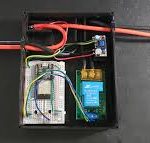
- Mount the ESP32 and wiring securely inside your enclosure.
- Place the enclosure safely near your electrical panel.
Understanding the Readings: Volts, Amps, and Watts
To truly benefit from your monitor, you need to grasp what the numbers mean. Your monitor will likely show values related to voltage, current, and power. In the United States, our homes typically run on 120 volts AC.
This is the electrical pressure. The current, measured in amps (A), is the flow of electricity. Different appliances draw different amounts of current.
Power, measured in watts (W), is the rate at which energy is used. Power is calculated by multiplying voltage and current (P = V x I). So, if you have 120 volts and a device draws 10 amps, it’s using 1200 watts.
That’s 1.2 kilowatts (kW).
Over time, you measure energy usage in kilowatt-hours (kWh). This is what utility companies charge you for. If you use 1000 watts for one hour, that’s 1 kWh.
Your monitor will track these cumulative readings. This allows you to see how much energy each appliance or your whole house uses over a day, a week, or a month. Understanding these basic electrical concepts makes interpreting your monitor’s data much easier and more useful.
Software Options for Visualization
Once your DIY smart home energy monitor is sending data, you need a way to see it. Several software platforms can help. For beginners, cloud-based services are often the easiest.
They handle the server setup for you.
Thingspeak is a great starting point. It’s from MathWorks. It lets you create channels to store data.
You can then build charts and graphs to visualize your energy usage. You can set it up to send data every few seconds or minutes. It’s free for basic use, which is perfect for a hobby project.
It makes seeing your trends simple.
EmonCMS is another excellent option. It’s open-source. You can host it on your own server (like a Raspberry Pi) or use their cloud service.
EmonCMS is more powerful. It has advanced features for analyzing energy data. It can handle more complex setups.
It’s widely used in the DIY energy monitoring community. It offers detailed dashboards and historical data analysis.
For more advanced users, setting up an MQTT broker and using a dashboard like Node-RED or Home Assistant can provide maximum flexibility. You can then integrate your energy data with other smart home devices. You could trigger actions based on energy usage.
For example, turn on a fan if the temperature is high and energy use is low.
The key is to choose a platform that matches your technical comfort level. Start simple and explore more advanced options as you become more familiar. The goal is clear, actionable data at your fingertips.
Safety Precautions: This is Crucial!
Working with electricity is dangerous. You must take extreme care. If you are not comfortable or experienced with electrical work, please do not attempt this project.
Hire a qualified electrician. Or, start with a kit that requires less direct interaction with your home’s main power supply.
Your Safety Checklist
- ALWAYS turn off the main power breaker to your home before opening the electrical panel.
- Use insulated tools designed for electrical work.
- Double-check all connections before restoring power.
- Ensure your enclosure is properly rated for electrical components and is safely installed.
- Never work on electrical systems during thunderstorms or wet conditions.
- If you see any frayed wires, damaged insulation, or loose connections, stop and seek professional help.
- Understand that incorrect wiring can damage your components, your home’s electrical system, or cause fire.
When installing the CT clamp, it should go around the main service wires that bring power into your house. There are usually two thick black wires and a bare copper ground wire. The CT clamp should only encircle the two hot (black) wires.
Never clamp it around the neutral or ground wires. If you are installing a voltage sensor, this typically involves tapping into the hot and neutral wires. This is where the risk is highest.
Make absolutely sure you understand your local electrical codes and practices.
The ESP32 and its components require very little power. They can often be powered by a standard USB adapter. You can place this adapter in a safe location away from the panel.
The data cable running from the sensor to the ESP32 should be protected and secured. Your enclosure should be fire-retardant and properly vented if needed.
Real-World Context: What Affects Your Readings?
The readings from your DIY smart home energy monitor will change throughout the day. This is normal. Think about your daily routine.
You might use more power in the morning when you run the coffee maker and toast bread. Then, usage might drop during the workday. It will likely increase again in the evening when lights are on, the TV is running, and dinner is being cooked.
Heating and cooling systems also cause major spikes in energy use, depending on the weather.
The materials and design of your home play a role. Older homes might have less efficient appliances or insulation. This means they might use more energy to achieve the same comfort level.
Modern smart appliances are designed to be more energy-efficient. They often use less power than older models. Your habits matter too.
Leaving lights on in empty rooms, running the dishwasher only half-full, or having the thermostat set too high all increase your energy consumption.
Understanding these patterns is key. Your monitor helps you identify these trends. You can then make changes to your habits or appliances to reduce usage.
For example, if you notice a particular appliance uses a lot of power even when idle, you might decide to unplug it. Or, if your heating costs are very high, you might consider upgrading your insulation. The data from your monitor makes these decisions concrete.
What This Means for You: Normal vs. Concerning
Seeing your energy usage fluctuate is perfectly normal. In fact, it’s expected. What’s important is understanding the baseline and the spikes.
If you see a steady, high energy draw when you think nothing is on, that’s worth investigating. It could be a phantom load – a device that draws power even when off. Or it could be an appliance malfunctioning and running constantly.
For example, an older refrigerator that’s constantly running might show a high, consistent power draw. A modern one will cycle on and off. If your heating or cooling system seems to be running much more than usual for the current weather, that’s also a sign.
It could indicate an issue with the system itself or poor insulation. Conversely, if you notice that your energy use drops significantly when you unplug certain devices, you’ve found your energy vampires!
You can perform simple checks. Start by unplugging devices one by one when the house is supposed to be “off” (like at bedtime). Watch your monitor’s readings.
If the number drops sharply when you unplug something specific, that device is a culprit. This detective work can save you money and improve your home’s efficiency. It’s about gaining awareness and then acting on that knowledge.
Quick Fixes and Tips for Energy Savings
Once you have your DIY smart home energy monitor up and running, you can start making smart changes. The data will guide you. Here are some general tips based on common findings:
- Identify Phantom Loads: Many electronics draw power even when turned off. Use your monitor to find these. Unplug them or use smart power strips to cut power when not in use.
- Appliance Efficiency: Older appliances are often energy hogs. If your monitor shows a specific appliance uses a lot of power, consider replacing it with a more energy-efficient model. Look for the ENERGY STAR label.
- Heating and Cooling: These systems are major energy users. Ensure your thermostat is set wisely. Seal air leaks around windows and doors. Clean or replace air filters regularly.
- Lighting: Switch to LED bulbs. They use significantly less energy than incandescent or CFL bulbs. Your monitor can show the savings over time.
- Water Heating: Make sure your water heater is set to an appropriate temperature (usually 120°F is sufficient). Insulate the tank if it’s older.
- Laundry Habits: Wash clothes in cold water when possible. Dry clothes on a line instead of using the dryer when weather permits.
The most important tip is to regularly check your monitor’s data. Look for trends. Celebrate reductions in usage.
Small changes, when made consistently, add up to significant savings. Your DIY monitor is the tool that makes these savings visible and motivating.
Frequently Asked Questions
Is it safe to install a DIY energy monitor myself?
Working with electricity can be dangerous. If you are not experienced or comfortable with electrical work, it is safest to hire a qualified electrician or purchase a commercial product. Always prioritize safety and follow all precautions.
What is the cheapest way to build a smart energy monitor?
The cost-effective route often involves using an ESP32 microcontroller, a non-invasive CT clamp sensor, and free or low-cost cloud platforms like Thingspeak. Many projects can be completed for under $50-$100 if you source parts wisely.
Do I need to be a programmer to build one?
Some basic programming knowledge is helpful, as you’ll need to upload code to the microcontroller. However, many open-source projects provide starter code that you can adapt. Online communities and tutorials offer extensive support for beginners.
How accurate are DIY energy monitors?
Accuracy depends on the quality of the sensors and the calibration of the system. Professional-grade monitors can be very precise. DIY monitors can provide excellent relative accuracy, showing you trends and identifying major energy users effectively, even if the absolute numbers have a small margin of error.
Can I monitor individual appliances with a DIY setup?
Yes, you can. For individual appliances, you would typically use smaller CT clamps that plug into an outlet or are wired into the appliance’s power cord. This allows for detailed tracking of specific device consumption.
What happens if my Wi-Fi goes out? Will my monitor still work?
This depends on your specific setup. If your monitor is programmed to only send data to the cloud, it will stop sending information when Wi-Fi is down. However, many microcontrollers can store data locally for a period and upload it once the connection is restored.
Some advanced setups allow for local network monitoring even without internet access.
Conclusion
Creating your own DIY smart home energy monitor is a rewarding project. It offers significant cost savings. More importantly, it gives you powerful insight into your home’s energy use.
You can pinpoint energy waste, make informed decisions, and lower your utility bills. With careful planning and attention to safety, you can build a smart, connected energy tracking system. Take control of your home’s power today!